 SugarLaps
This is what works for me, and I'm not a doctor. Your body will respond differently from mine, so talk it through with your care team before you change anything.
What I see
When I run, my glucose drops on almost every run, sometimes a little and sometimes all the way down to around 3 mmol/L (54 mg/dL).
In the gym, where I mostly train with my own body weight, my glucose stays very stable.
Before I start
Before a run I want my glucose at 7 mmol/L (126 mg/dL) or higher, and before I take my kite out on the water, at 6 mmol/L (108 mg/dL) or higher.
I wear a MiniMed 780G. Before a kite session I put it on the Temp Target. Before a run I only do that on some days, about half an hour ahead.
While I exercise
I never go for a run without glucose tablets. On the water I keep fast carbs in a waterproof bag in my harness, a gel or a small bottle of soda.
My pump stays on while I kitesurf. It sits in a rubber sleeve under my wetsuit, pressed against my chest so it can't slide away. A session lasts 2 to 3 hours, sometimes with a short break for a snack.
Afterwards
After a run I usually eat a banana or three glucose tablets, followed by a proper meal.
More guides
Running with type 1 diabetes: how I prepare for 5 to 6 km, and what the guidelines say about each part of a run.
Strength training with type 1 diabetes: why my glucose stays stable in the gym, and why I leave the pump's exercise target off there.
Blood sugar after exercise: why it drops after a run and can rise after the gym, and how long each lasts.
What the guidelines say
Two groups of doctors and researchers have written down what they agree on about exercise with type 1 diabetes, and I use both here.
The first is an international group whose advice was published in 2017 in the medical journal The Lancet Diabetes & Endocrinology.1 Below I call it the 2017 advice. The second comes from the European diabetes association EASD and from ISPAD, the international society for young people with diabetes. It dates from 2025 and is about pumps that adjust insulin on their own, like my 780G.2 I call it the 2025 pump advice. Now and then I also mention the guideline that the American Diabetes Association writes for doctors every year.3
What exercise does to glucose
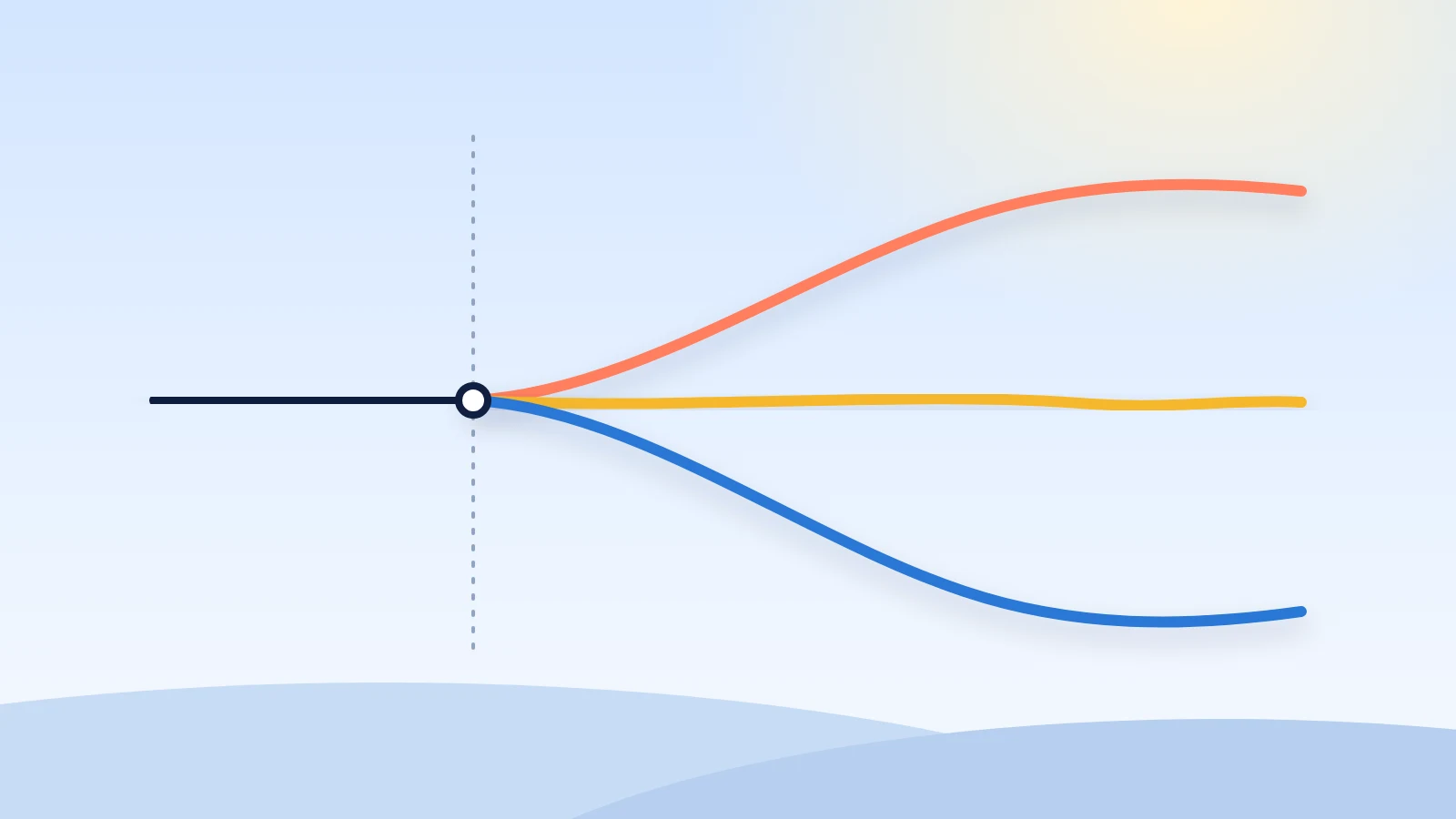
It depends on the kind of exercise. Steady exercise that you keep up for a while, such as running or cycling, lowers glucose. Doctors call that aerobic. Short, hard efforts such as sprints and lifting weights raise it, and sports that mix the two keep it fairly level. That is how the 2017 advice sums it up.1
It adds two details. An interval session lowers glucose less than steady exercise does, and doing strength exercises before steady exercise makes the drop smaller.1
The 2025 pump advice adds the time of day: exercise in the morning before breakfast usually lowers glucose less, and can even raise it.2
Before you start
The 2017 advice names a glucose level to start from. For steady exercise of up to an hour that is 7 to 10 mmol/L (126 to 180 mg/dL), and for short, hard efforts and interval sessions 5 to 7 mmol/L (90 to 126 mg/dL). Below 5 mmol/L (90 mg/dL) it says to take 10 to 20 grams of glucose first.1
Pumps that adjust insulin on their own have a setting for exercise. It raises the glucose level the pump aims for, so the pump gives less insulin. On my MiniMed 780G it is called the Temp Target. The 2025 pump advice says to turn it on 1 to 2 hours before exercise that you have planned and expect to lower your glucose. If you hadn't planned it, it says to turn the setting on when you start.2
While you exercise
The 2025 pump advice says to always have fast-acting carbohydrates with you, the kind that work quickly. If your glucose falls below 7.0 mmol/L (126 mg/dL) during exercise, it recommends a small amount of them, 3 to 20 grams, depending on the arrow next to your sensor reading.2 The amount for each arrow is in my running guide.
Afterwards
Both steady exercise and hard efforts can cause a low hours later. According to the 2017 advice, the risk stays raised for at least 24 hours, and a low during the night is most likely after exercise in the afternoon.1
It names two reasons not to exercise at all: a severe low in the past 24 hours, and ketones in your blood of 1.5 mmol/L or higher. Ketones are a sign that your body is short of insulin.1
How much exercise
The American guideline advises most adults with type 1 to do at least 150 minutes a week of steady exercise at a moderate to hard effort, spread over at least 3 days, with no more than 2 days in a row without any.3
Both the 2017 advice and the 2025 pump advice say that people respond differently to the same exercise, and that what they recommend is a starting point.1,2
Sources
- Riddell MC, Gallen IW, Smart CE, et al. Exercise management in type 1 diabetes: a consensus statement. Lancet Diabetes Endocrinol 2017;5:377-390. PubMed. Figures taken from the accepted manuscript.
- Moser O, Zaharieva DP, Adolfsson P, et al. The use of automated insulin delivery around physical activity and exercise in type 1 diabetes: a position statement of EASD and ISPAD. Diabetologia 2025;68:255-280. Full text.
- American Diabetes Association. Standards of Care in Diabetes 2026, section 5: Facilitating positive health behaviors and well-being. Diabetes Care 2026;49(Suppl 1):S89-S131. Full text.
The sources give glucose in mmol/L. The mg/dL values on this page are those figures times 18.
Spotted a mistake? Email hello@sugarlaps.com.
SugarLaps is a training diary. It shows the data your sensor already recorded and gives no advice. MiniMed is a trademark of Medtronic. SugarLaps is not affiliated with Medtronic.